
Key Takeaways
- A diabetic eye exam checks the retina, blood vessels, and optic nerve for damage linked to blood sugar levels.
- Diabetic retinopathy often shows no early symptoms, so regular appointments help catch changes sooner.
- The exam may include pupil dilation, a vision chart test, an eye pressure check, and retinal imaging.
- People with diabetes need eye exams on a set schedule based on diabetes type and other factors.
- Planning ahead for dilation, including arranging for a ride home, makes the appointment easier.
Diabetic Eye Exams Help Preserve Vision
Living with diabetes means keeping track of a lot of numbers. Blood sugar readings, medication timing, and meal planning can take up a lot of mental space, and your eyes might not be the first thing on your mind. But regular eye exams are still important.
A diabetic eye exam is a detailed look at the retina, blood vessels, and optic nerve that checks for damage caused by high blood sugar. This exam goes beyond a standard vision check and gives our team at Eye Care Center of Colorado Springs a closer look at how diabetes may be affecting your eye health.
What Is a Diabetic Eye Exam?
A diabetic eye exam focuses on the eye-related risks that come with diabetes. Your eye doctor examines the retina, the blood vessels behind your eye, and the optic nerve to look for early signs of damage. This differs from a routine eye exam, which has less of a focus on issues caused by high blood sugar.
Why Eye Exams Matter for People with Diabetes
High blood sugar can damage the small blood vessels in your retina over time. The resulting condition, known as diabetic retinopathy, can progress for months or years before you notice any change in your vision.
Diabetic retinopathy often has no early symptoms, so many people don’t notice that something is wrong until the condition progresses. Catching changes early gives your eye doctor more options to help protect your long term vision.
Signs to Watch For
While the early stages of diabetic retinopathy often don’t have noticeable symptoms, people with the condition may experience:
- Blurry or fluctuating vision
- Dark spots, floaters, or empty areas in your field of view
- Difficulties with night vision
- Low vision and vision loss
What to Expect During the Exam
Pupil Dilation
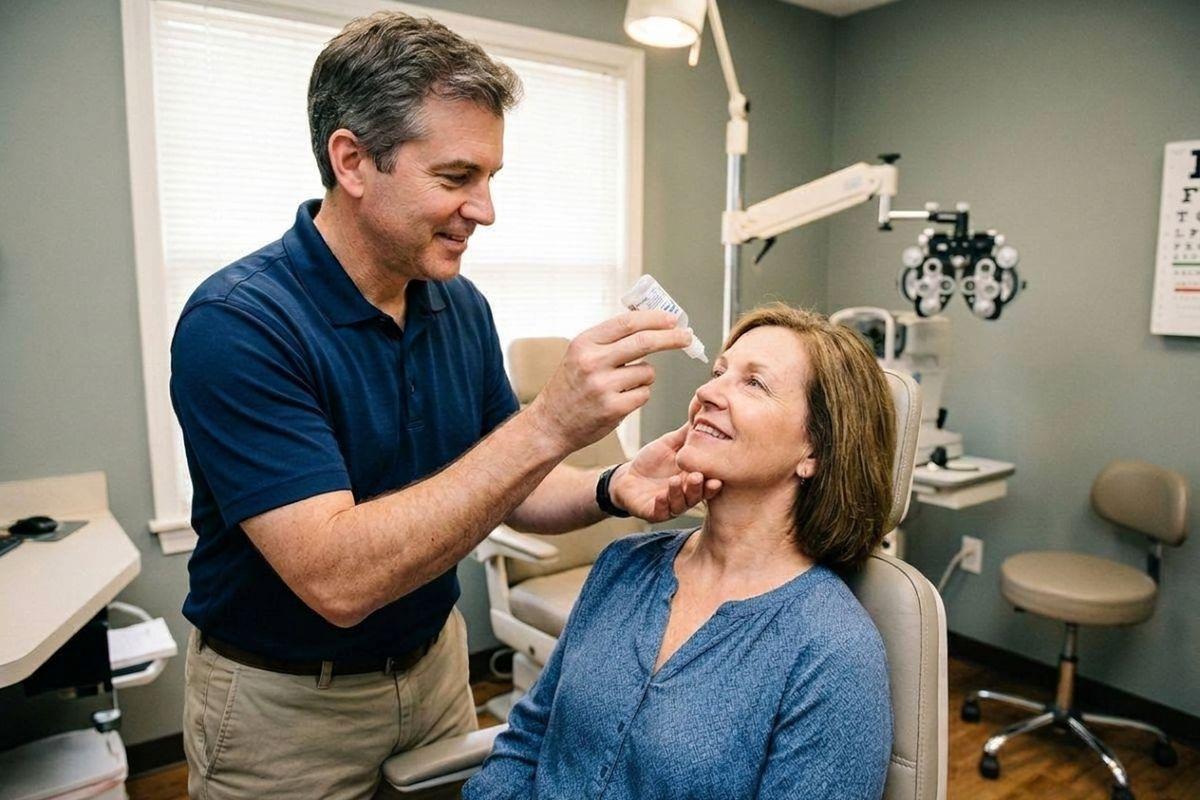
Your eye doctor will likely use eye drops to widen your pupils. This gives them a clearer view of the retina and optic nerve at the back of your eye.
After dilation, expect some temporary blurry vision and light sensitivity. This usually fades within a few hours.
Common Tests Performed
- A visual acuity chart test to check how clearly you see at different distances
- An eye pressure check to check for signs of glaucoma
- Retinal imaging or an OCT scan to capture detailed pictures of the retina
How Often Should You Schedule Eye Exams
The right schedule depends on your type of diabetes and personal health history.
- If you have type 1 diabetes, plan for an eye exam within 2 years of your diagnosis.
- If you have type 2 diabetes, schedule an eye exam right after your diagnosis.
- If you’re pregnant and have diabetes, plan for an exam during your first trimester and again after delivery.
- It’s also generally recommended that people with diabetes book yearly exams.
How to Prepare for Your Visit
A little planning can make your appointment go smoothly. Arrange a ride home ahead of time, as your vision may stay blurry for a few hours after your appointment. It can also help to bring a pair of sunglasses to protect your eyes until they return to normal.
Schedule Regular Eye Exams
Keeping up with regular eye exams gives you a clearer picture of how diabetes may be affecting your eyes over time. Reach out to our team at Eye Care Center of Colorado Springs to book your diabetic eye exam and take a proactive step toward protecting your vision.