
Key Takeaways
- Closed eyes get less oxygen, which can let bacteria build up on your lenses.
- Sleeping in contacts raises your infection risk substantially.
- Even short naps can dry out your eyes and add risk.
- Some lenses are made for overnight wear, but risk is still present.
- If you wake up in your contacts, remove them carefully and watch for symptoms.
Take Your Contacts Out Before Bed
You’ve had one of those nights. You crash on the couch after a long day, and you wake up with your contacts still stuck to your eyes. This happens more than you’d think to our patients at Eye Care Center of Colorado Springs, and the first question that we often hear afterwards is usually the same one: is it okay to sleep in your contacts?
You should not sleep in your contact lenses unless your eye doctor has specifically prescribed a lens approved for overnight wear. Even then, the risk of infection goes up. Knowing why this happens, and what to do if it happens to you, can help you protect your eyes.
What Happens When You Sleep in Contacts
Your eyes get oxygen every time you blink with your eyes open. That steady flow keeps your cornea, the clear front surface of your eye, healthy and functioning.
When you close your eyes to sleep, the oxygen supply drops. Contact lenses reduce it even more. The resulting low-oxygen environment can turn into a real problem over time.
Risks & Signs of Trouble
Infections & Eye Damage
Sleeping in your contacts raises your infection risk substantially compared to removing them each night. One serious outcome is a corneal ulcer, an open sore on the eye’s surface that can cause lasting damage to your vision. Another potential outcome is bacterial keratitis, an infection of the cornea that may require emergency attention.
Symptoms to Watch For
If you’ve slept in your contacts, pay attention to how your eyes feel over the next day. Watch for these symptoms:
- Eye pain or redness that doesn’t go away quickly
- Blurred vision or sensitivity to light
- Discharge from the eye or excess tearing
Any of these signs mean it’s time to get your eyes checked.
Are Naps with Contacts Safe?
You might think a quick nap is different from a full night’s sleep. However, naps aren’t as safe as they may seem. Even short naps still raise your infection risk, and as little as 5 minutes with your eyes closed can start to dry out your lenses and your eyes.
If you feel a nap coming on, take a moment to remove your contacts first. Your eyes can rest just as well without them, and you’ll wake up without that dry, gritty feeling.
Which Contacts Allow Overnight Wear
Extended Wear Lenses
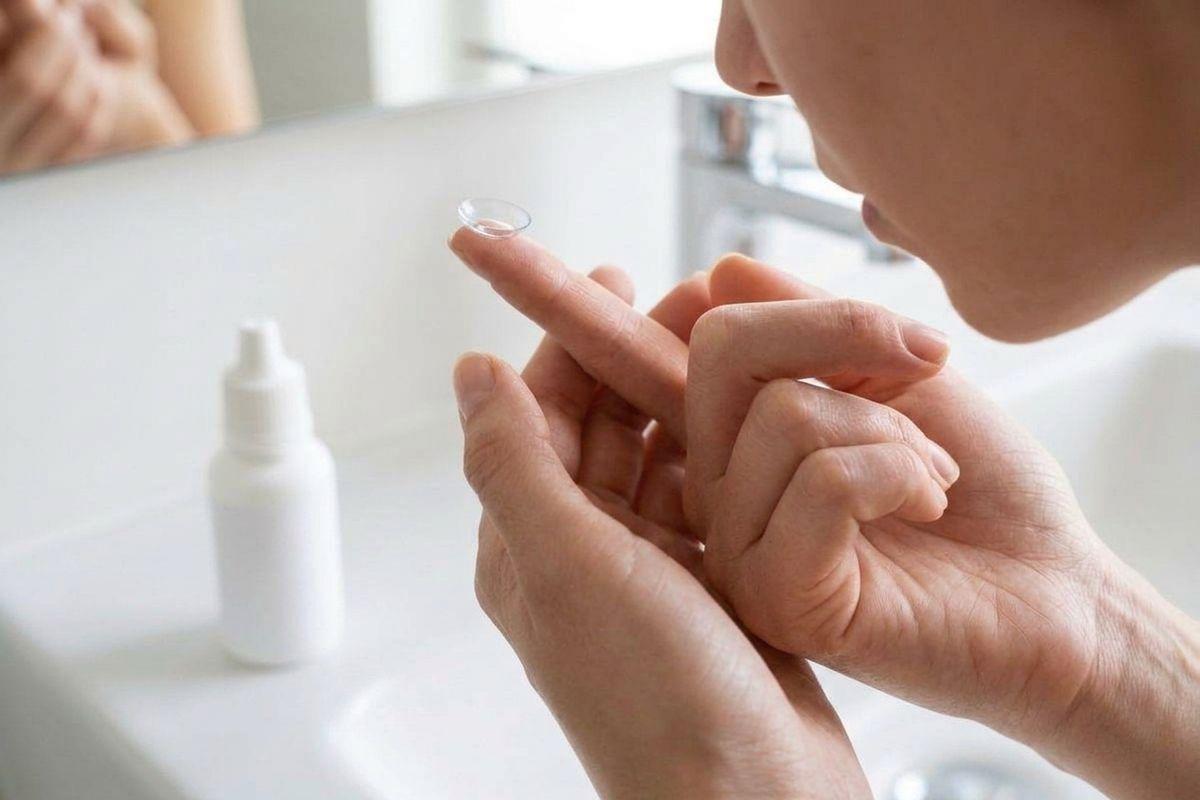
Some lenses are FDA approved for continuous, overnight wear. These are typically made from silicone hydrogel, a material that allows more oxygen to reach your cornea than older lens materials.
Even with this modern material, however, extended wear lenses still carry a higher infection risk than removing your contacts nightly. Approval for overnight wear doesn’t mean that the risk disappears completely.
Other Lens Types
Daily disposable lenses are made to be worn once and thrown away. They were never designed for sleep, no matter how tired you are.
Toric lenses, which correct astigmatism, follow the same overnight rules as standard lenses. Ortho-k lenses, however, are a different case. These lenses are worn overnight on purpose, since they work by reshaping the cornea temporarily while you sleep.
What to Do If You Slept in Contacts
Immediate Steps
If you wake up and realize your contacts are still in, don’t panic and don’t rub your eyes. Follow these steps:
- Wash your hands thoroughly before touching your eyes
- Add rewetting drops to help loosen the lenses
- Remove the lenses gently, never tugging or pulling
After Removal Care
Once your contacts are out, give your eyes a break. Consider these steps for the rest of the day:
- Wear your glasses instead of putting contacts back in
- Watch for redness or pain that lingers
- Schedule a visit with your eye doctor in Colorado Springs if symptoms show up
Your eyes go through a lot in a single day, and a little extra care after a night in your contacts goes a long way. Our team at Eye Care Center of Colorado Springs can help you find the right lenses for your lifestyle and check on your eye health when something feels off. Reach out and schedule an appointment to talk through your contact lens habits and keep your eyes comfortable.