
You probably think of an eye exam as a way to check your vision for glasses or contacts. While that’s of course important, a comprehensive eye exam does much more. Your eyes offer a unique view of your overall health, and a routine check can spot signs of other health conditions before you even notice symptoms.
A comprehensive eye exam can detect serious eye diseases and a range of systemic health conditions, often before you notice symptoms. This gives you and your doctor a chance to get ahead of potential issues, helping you protect your sight and your health.
More Than Just Vision—Your Eyes & Overall Health
The blood vessels, nerves, and tissues inside your eyes can show early signs of general health issues. This is partly because the eye is the only place where a doctor can see your blood vessels in action without the need for surgery. This direct view provides important clues to your health that might not be visible anywhere else.
An exam is a simple, non-invasive way to look after your vision and your health at the same time.
Common Eye Diseases Found During an Exam
Regular exams are key to finding serious eye conditions early, giving you more options to protect your sight. Many of these diseases develop quietly, with few or no symptoms in their initial stages. We can often find them long before you notice a change in your vision.
Glaucoma
This condition causes damage to the optic nerve, which acts as the connection between your eye and your brain. Glaucoma often develops slowly and painlessly, which is why it can go unnoticed without a professional eye exam. An eye pressure test is a routine part of an exam that helps screen for it.
Glaucoma often causes:
- Gradual loss of side vision
- Tunnel vision in advanced stages
Cataracts
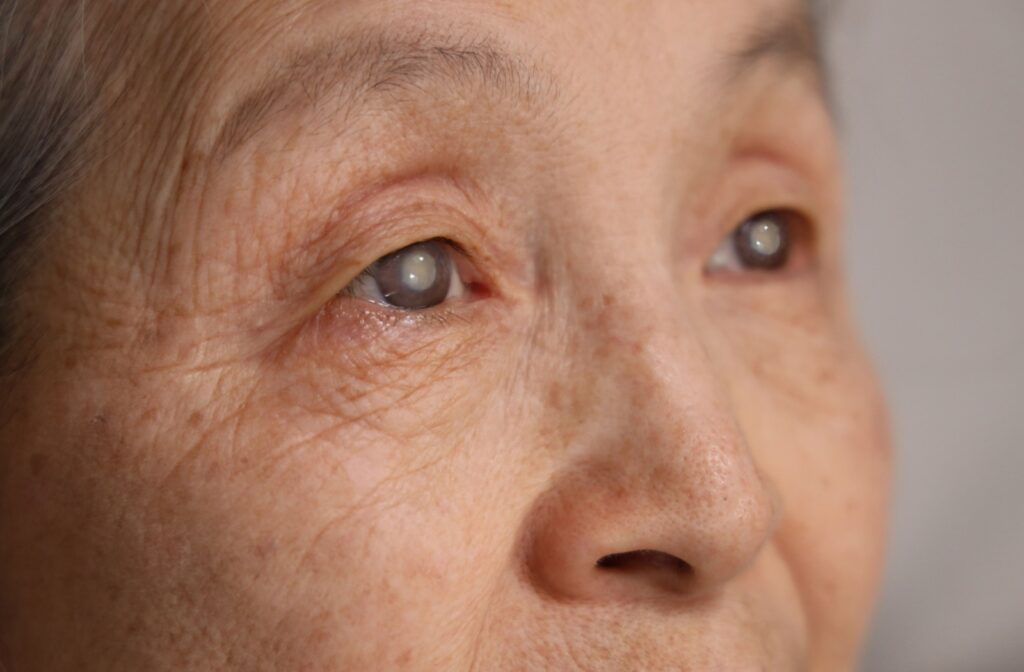
Cataracts arise when the clear lens inside your eye becomes cloudy, which can make your vision seem dull or blurry. Cataracts occur naturally with age, and often progress very slowly.
Common symptoms include:
- Blurry or dim vision
- Colors that look faded
- Increased glare from lights
Macular Degeneration
This disease affects your central vision, which is what you rely on for reading, driving, and seeing faces clearly. It’s caused by damage to the macula, a small part of your retina. While macular degeneration doesn’t cause total blindness, it can significantly impact your daily life.
Common symptoms of macular degeneration include:
- Straight lines that appear wavy
- A blurry or dark spot in your central vision
Diabetic Retinopathy
This is a complication of diabetes that affects the eyes. It’s caused by damage to the blood vessels in the retina—the light-sensitive tissue at the back of the eye. If you have diabetes, regular eye exams are an important part of managing your health.
Common symptoms include:
- Floaters or dark spots in your vision
- Blurred vision
Systemic Diseases Your Eye Doctor Can Spot
Your eye exam can also reveal signs of conditions that affect your whole body, not just your eyes. Because the blood vessels in the retina are so small and delicate, they’re often among the first to show signs of trouble. Finding these signs early gives you a head start on getting care.
Diabetes
Your optometrist may find bleeding or yellowish deposits from blood vessels in the retina. These can be early indicators of diabetes. An eye exam can help alert you to the condition sooner.
High Blood Pressure
Your retinal blood vessels can show signs of high blood pressure, also known as hypertension. Your eye doctor may notice unusual bends, kinks, or even tears in these vessels. These changes can suggest high blood pressure.
High Cholesterol
A yellow or blue ring around the cornea—the clear front part of the eye—can be a sign of high cholesterol, especially in people under 40. This deposit, called a corneal arcus, can be easily spotted during a routine exam.
Autoimmune Conditions
Inflammation in the eye can sometimes be one of the first signs of an autoimmune condition like lupus or rheumatoid arthritis. Because these conditions cause the body’s immune system to attack its own tissues, the delicate structures of the eye can be affected. We can identify this inflammation during your exam.
What to Expect from an Exam with Your Eye Doctor in Colorado Springs
A comprehensive eye exam is a straightforward and comfortable process. Your doctor will perform several tests to get a full picture of your eye health and vision. Our goal is to make your experience as easy and informative as possible.
A Look at Your Eye’s Structure
We look at all the different parts of your eye, from the cornea at the front to the optic nerve at the back. We use a range of instruments and imaging to get a clear view of the structures of your eye. This helps us check for any changes or signs of disease that might not be visible otherwise.
Why Regular Eye Exams Matter for Everyone
Even if you have perfect vision, you can still benefit from regular eye exams. Many of the conditions that an eye exam can detect have no noticeable symptoms in their early stages. Early detection is therefore often the key to better outcomes. Scheduling a routine visit is a positive step for your well-being. Contact our team at Eye Care Center of Colorado Springs today to schedule your comprehensive eye exam.