
Your eyes feel dry, scratchy, or tired, no matter how many drops you use. You blink more, your vision blurs at the end of the day, and nothing seems to give you lasting relief. If that sounds familiar, you’re not alone, and there may be a reason your drops aren’t working as well as you’d hoped.
Low-level light therapy, or LLLT, uses specific wavelengths of LED light to address the underlying causes of dry eye, including blocked oil glands and eyelid inflammation, rather than just masking the symptoms. It’s a noninvasive, in-office treatment gaining attention for both dry eye and certain retinal conditions, such as age-related macular degeneration (AMD). Our team at Eye Care Center of Colorado Springs offers this therapy as part of a broader approach to dry eye care that goes beyond temporary fixes.
What Is Low-Level Light Therapy (LLLT)?
LLLT is a treatment that delivers controlled wavelengths of light directly to tissue to activate a healing response at the cellular level. The concept was originally developed by NASA to support tissue repair in space, and it’s since found a home in medical settings for a range of conditions, including eye care. The light doesn’t cut, burn, or damage. It simply interacts with your cells, encouraging them to function better.
For dry eye specifically, LLLT targets the areas around your eyelids where your tear film starts, or fails to start. By delivering precise wavelengths to those areas, it can help your eyes form a more stable tear film over time.
How LLLT Targets the Root Cause of Dry Eye
The Role of Meibomian Glands in Dry Eye
Your eyelids are lined with tiny glands called meibomian glands, and their job is to release a thin layer of oil every time you blink. That oil sits on top of your tears, keeping them from evaporating too quickly. When those glands get blocked or start producing poor-quality oil, your tear film breaks down fast, leaving your eyes feeling dry, irritated, or uncomfortable within minutes of blinking.
This condition is called meibomian gland dysfunction, or MGD, and it’s one of the most common reasons dry eye symptoms persist even with regular drop use. LLLT works by addressing those glands directly, rather than just adding moisture to your eyes as a temporary fix.
What Red and Blue Light Do for Your Eyes
Red light gently warms the meibomian glands, which helps loosen the thick, waxy buildup that blocks them. Think of it like warming up cold butter. It makes the oil flow more easily, so your glands can do their job again. This warming effect can improve the quality of oil your glands release with each blink.
Blue light targets inflammation around the eyelids, which often contributes to gland dysfunction and ongoing discomfort. Together, red and blue light wavelengths address 2 different parts of the problem simultaneously, helping improve tear film stability from the inside out.
What to Expect During an LLLT Treatment
A Simple, Relaxing In-Office Session
During a session, you’ll wear a lightweight mask that emits the appropriate light wavelengths around your eye area. The treatment typically lasts between 15 and 30 minutes, and many people describe it as relaxing. There are no needles, and there is no recovery time afterward. You can go right back to your normal day when it’s done.
How Many Sessions Will You Need?
The number of sessions required varies per person, and can be between 6-12 sessions spread over 3 weeks. Results can often be noticed within the first few weeks of treatment, though everyone responds a little differently. The eye doctor will monitor your progress and adjust the plan based on how your eyes are responding. This kind of personalized care is part of what the ocular and aesthetic medicine approach at the practice is built around.
LLLT for Age-Related Macular Degeneration (AMD)
How Yellow Light Works Differently
When LLLT is used for age-related macular degeneration, or AMD, the approach shifts to yellow light. Yellow light wavelengths reach deeper into the eye, targeting the retinal cells in the macula, which is the part of your eye responsible for clear, central vision. Rather than addressing glands or inflammation on the surface, yellow light supports cellular repair within the retina over time.
This is a separate application from the red and blue light used for dry eye, and it’s designed for a very different part of the eye. The wavelength is chosen specifically because of how it interacts with retinal tissue. Age-related macular degeneration can progress without obvious early symptoms, which is part of why targeted therapies like this are worth exploring sooner rather than later.
Who May Benefit from Yellow Light Therapy
Yellow light therapy is something an eye doctor in Colorado Springs may consider for people showing early signs of AMD or other retinal concerns.
It’s not a one-size-fits-all solution, and eligibility depends on a thorough evaluation of your retinal health. A comprehensive eye exam helps determine whether this type of therapy is appropriate for your situation. This treatment is usually done over the course of 8 sessions, 2-3 times a year.
Is LLLT the Right Fit for Your Eyes?
LLLT may be worth exploring if you’ve noticed any of the following:
- Persistent dryness even with regular eye drop use
- Ongoing eye irritation, burning, or blurry vision
- Early signs of AMD or retinal changes
- A diagnosis of meibomian gland dysfunction (MGD)
We Can Help
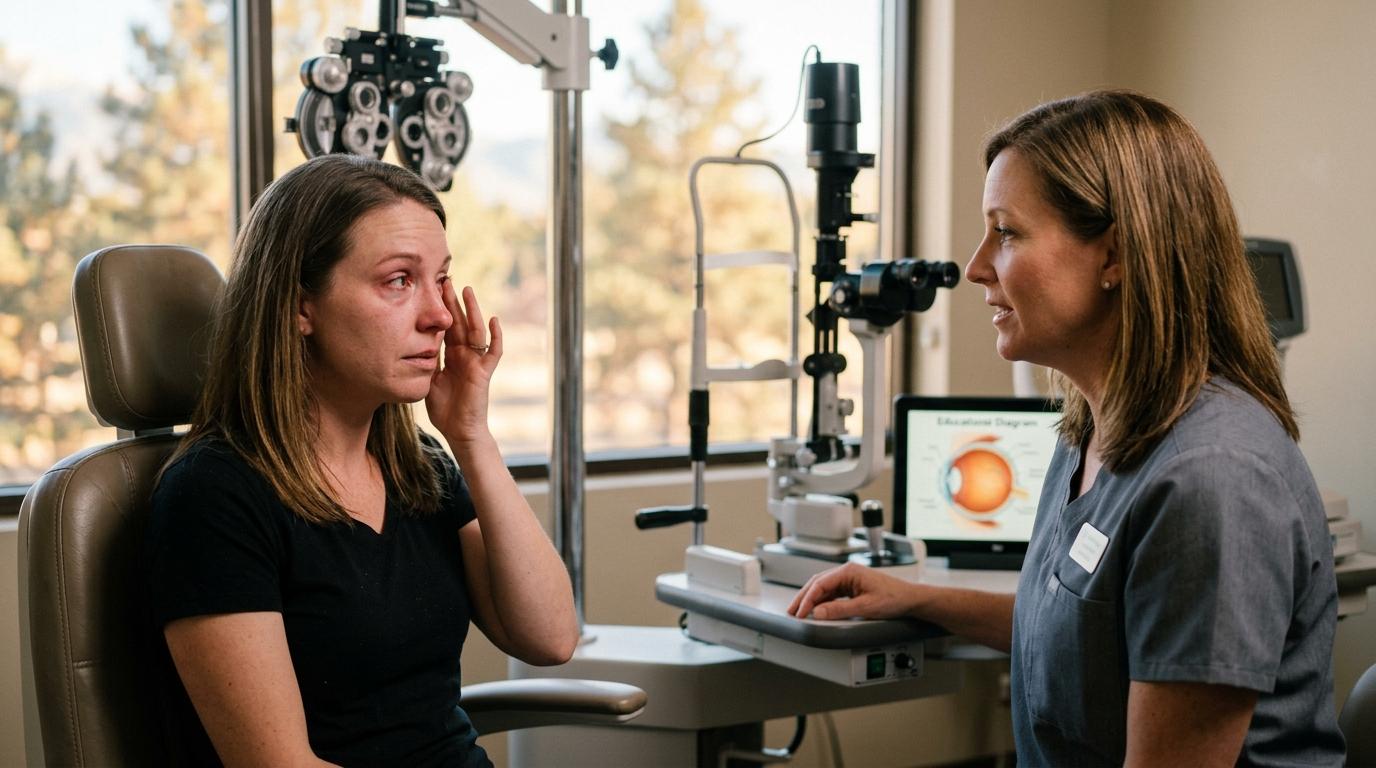
A full dry eye evaluation gives your eye doctor a clear picture of what’s actually happening with your tear film and glands. LLLT is considered safe for most adults, including those with sensitive skin, but the right approach depends on your specific eye health picture. This evaluation is the starting point for determining whether LLLT can meet your eyes’ needs. Eye exams at our practice are designed to look at the full picture, not just surface-level symptoms.
At Eye Care Center of Colorado Springs, our team takes time to understand what’s behind your symptoms before recommending any treatment. If you’re ready to get a clearer picture of your eye health and explore options like LLLT, reach out to schedule your dry eye evaluation today.